Shapermint serves 5M+ shoppers and acquires over 1.5M first-time users annually. Nearly 30% of total revenue depended on upselling, but in 2020 refund rates spiked—threatening both growth and customer trust.
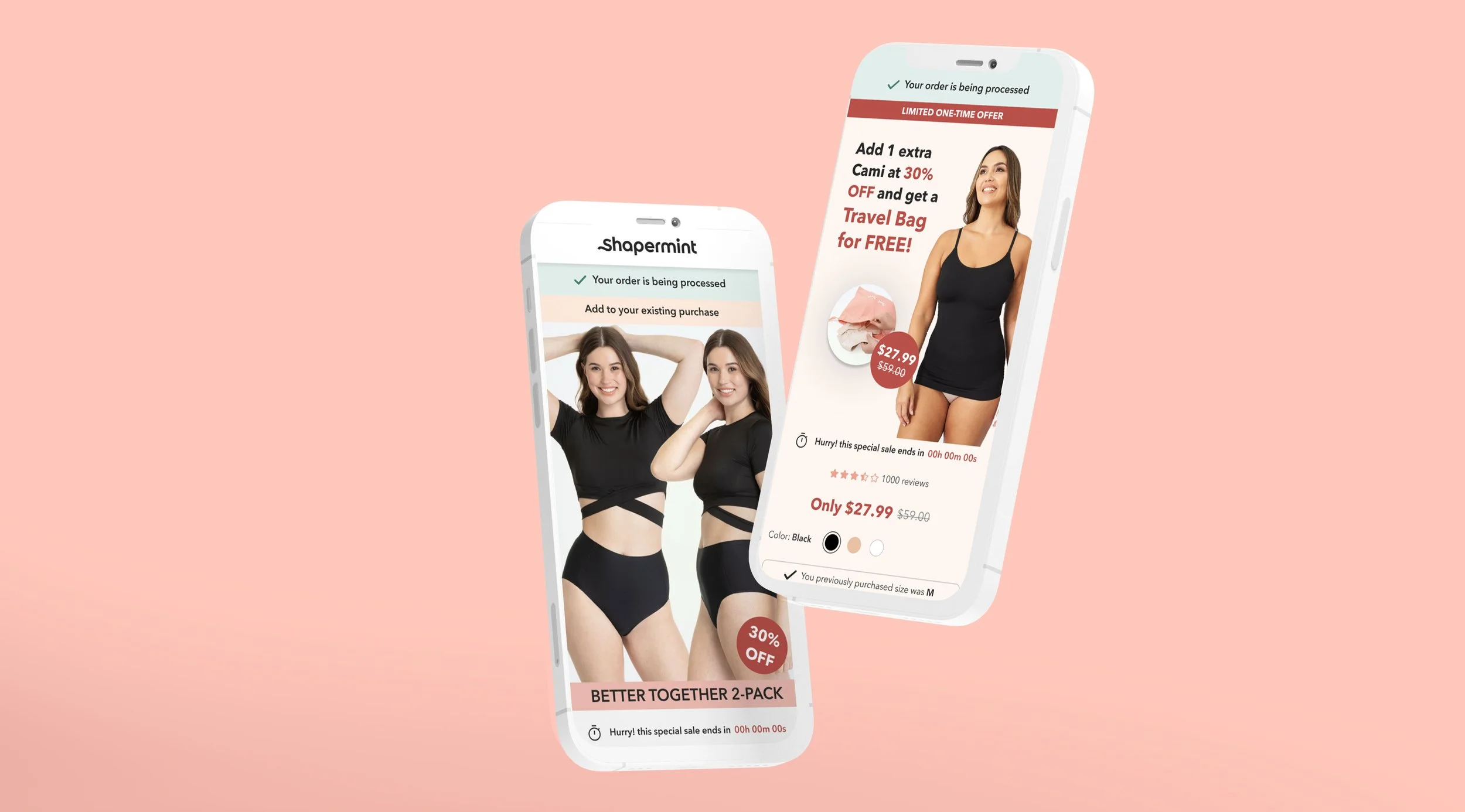
As Product Design Manager, I led a team of five designers to redesign Shapermint’s post-checkout experience. I owned UX strategy, experimentation, and cross-functional alignment—transforming intrusive upsells into a scalable revenue system. Through data-driven experimentation, we increased AOV to $52.59, reduced cancellations by 3.27%, and eliminated duplicate orders—positioning UX as a strategic driver of growth and trust.
The Problem
Within one month, refund rates increased from 1.36% to 1.72%, driven by duplicate orders caused by unclear system feedback after payment. Because 30% of revenue depended on post-checkout upsells, the issue required preserving revenue while restoring trust.
The Goal
• Reduce cancellations by ≥ 4%
• Preserve or increase AOV
• Rebuild post-payment trust
The challenge was balancing revenue protection with post-payment clarity—reducing friction without hurting conversion.
Research Insights
Quantitative
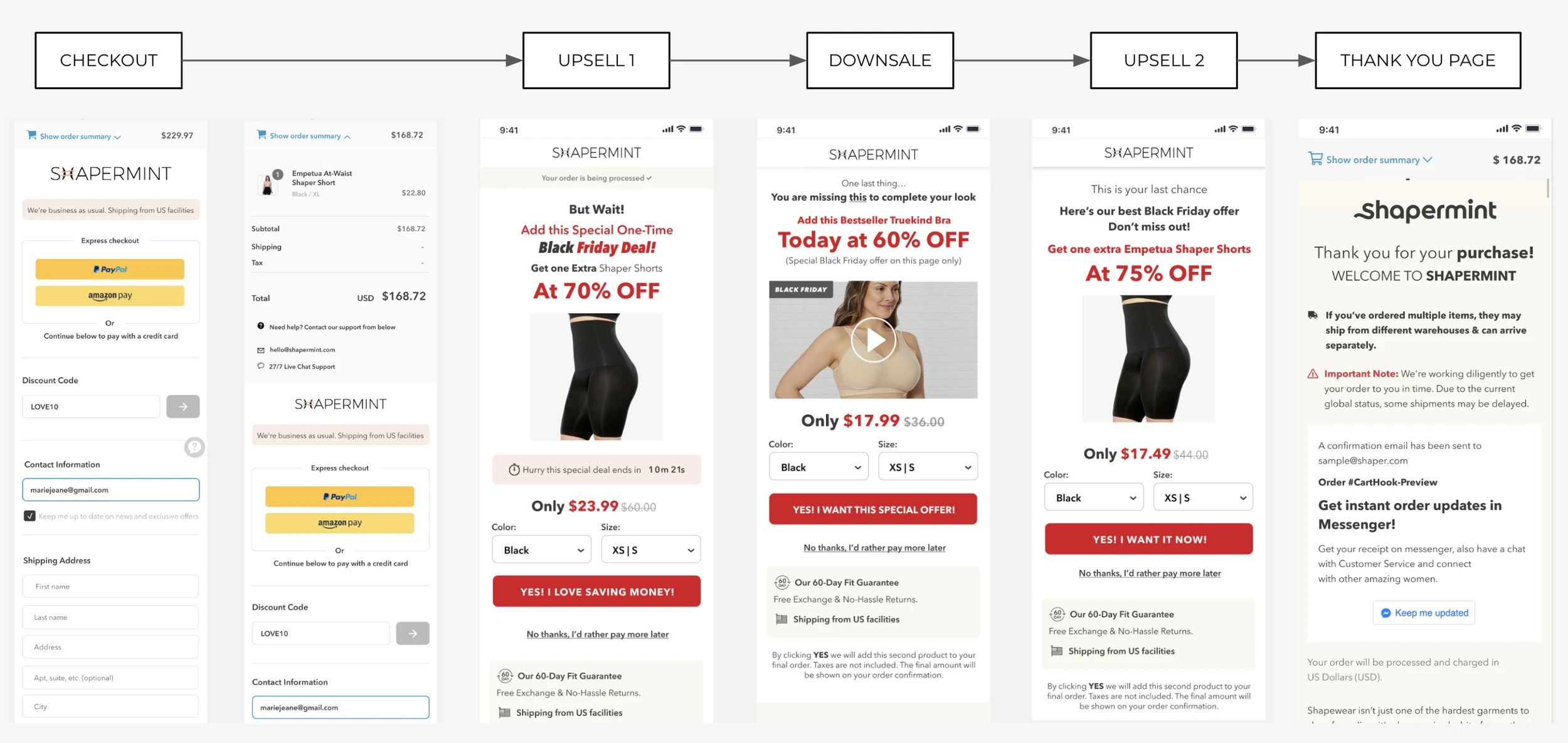
• Hotjar revealed steep drop-offs across post-checkout upsell steps
(18.9% → 17.9% → 5.5% → 1.6%)
• Support logs showed duplicate orders occurring within 5–8 minutes, indicating perceived payment failure
Qualitative
• Users believed their payment had failed
• Repeated CTAs increased anxiety and confusion
• Customers re-purchased to “fix” the order
Competitive Benchmark
• Reviewed five DTC competitors
• All used pre-checkout upsells to reduce cognitive overload and reinforce order confidence
This benchmark aligned stakeholders around shifting upsells earlier in the flow and reduced debate around the strategy change.
Strategy & Concept Development
I led cross-functional alignment to pivot from intrusive post-checkout pop-ups to a distributed, contextual upselling model integrated throughout the purchase flow.
Design Principles
• Transparency – always show what’s added
• Continuity – minimize interruptions
• Clarity – softer CTAs and opt-outs
• Consistency – unified through Afrodita Design System
Execution Highlights
I set design direction and led reviews while designers executed component updates and experiments across squads.
Visual & Structural
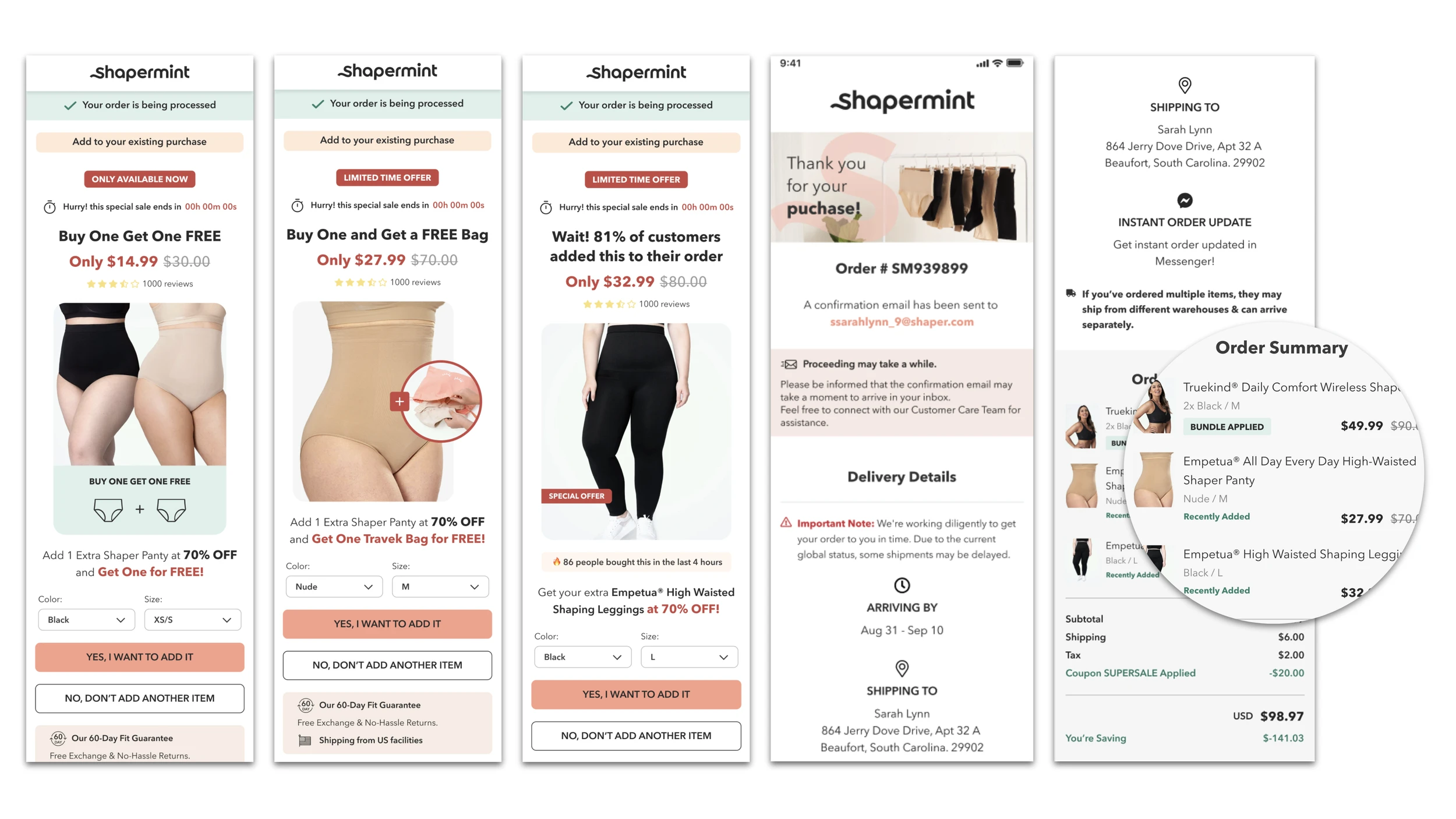
• Redesigned Thank-You Page → order summary + tracking clarity
• Consistent modals and banners across squads via Afrodita Design System
Interaction & IA Upgrades
• Spinner Communication → asynchronous loader signaled “processing” to avoid duplicates
• Add-On Hints → inline cues confirming additions
• CTA Refinement → “Add to Order / Skip” replacing pushy prompts
• Information Architecture → PDP → Cart → Pre-checkout upsells → Minimal post-checkout.

Results
Metrics Before & After
Average Order Value: $52.59
Basket Size: +2.55 items
Cancellation Rate: −3.27%
Email Confirmation Views: −58%
Broader Business Impact
This work repositioned UX from a conversion optimizer to a strategic growth partner across Shapermint’s checkout ecosystem.
• SUS Score: improved from: 56.5 → 78 (+21.5)
• Duplicate order reports: eliminated during testing
• Customer sentiment: marked reduction in frustration and confusion
Internal impact
• Enabled faster experimentation cycles across squads
• Reduced design debt through shared upsell patterns

Usability Outcomes
• 204 A/B component test winners integrated into Afrodita Design System
• Unified user experience across checkout ecosystem
• Improved Shopify performance stability
• Scalable upselling patterns replicated across categories
Takeaways
• Leadership: Clear UX principles enabled faster, safer decisions across teams
• Strategy: Pre-checkout upsells preserved trust while sustaining revenue
• Scalability: Afrodita Design System reduced cross-squad friction
• Future: Personalization engine for intelligent bundle recommendations


